
When Is It Time to Replace Your Roof? A Mid-Michigan Homeowner's Checklist
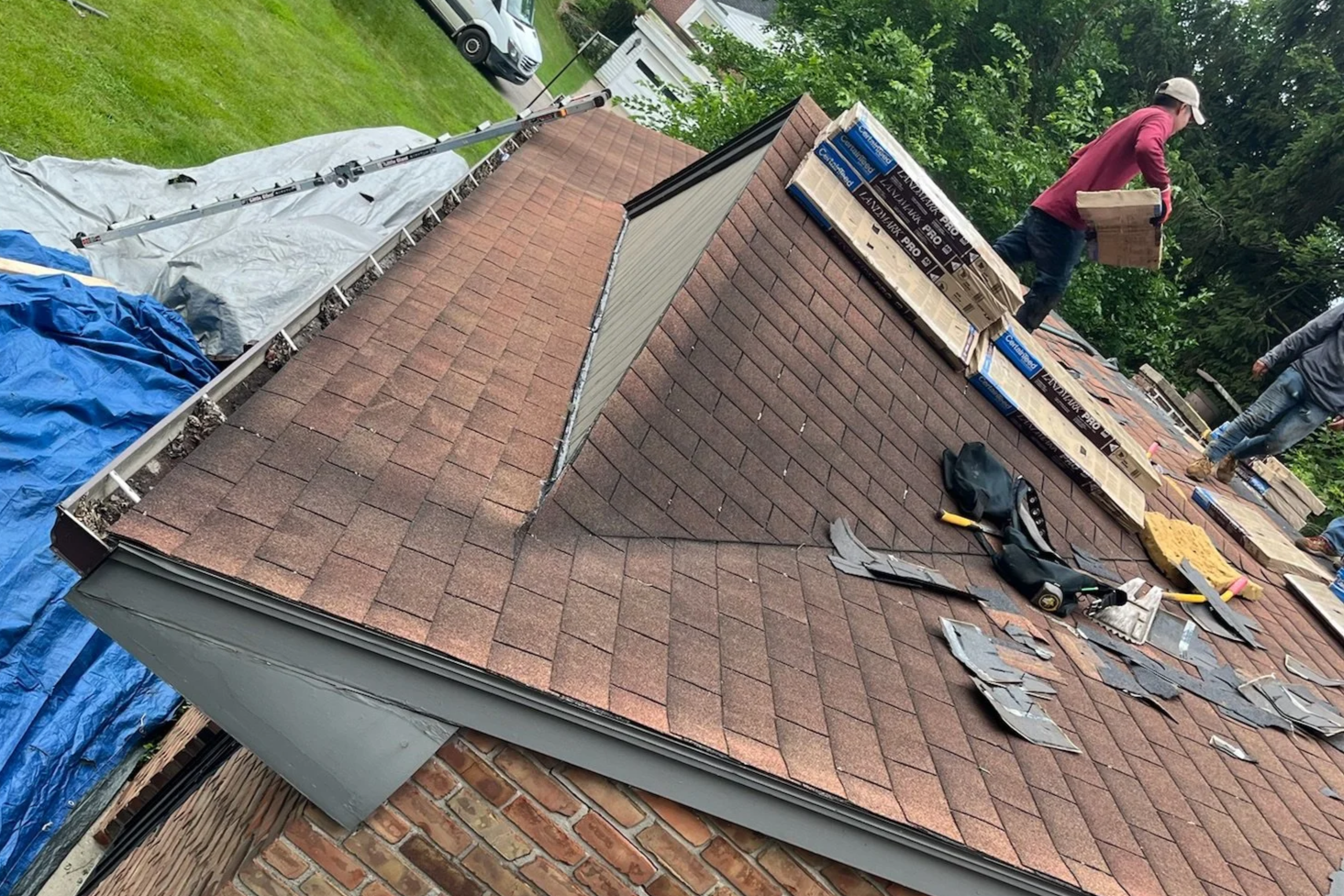
Most homeowners do not call us the day their roof fails. They call us after months of wondering. A shingle turns up in the flower bed. A ceiling stain appears and then seems to stop. The gutters keep filling with what looks like coarse black sand.
We have been serving Greater Lansing since 2000, and here is what we have learned: knowing when to replace your roof is rarely about one dramatic sign. It is about what the whole system is telling you, and where you happen to be standing when you notice it.
Michigan weather does not go easy on a roof. Wind, heavy wet snow, ice at the eaves, summer heat on the south slope, and that endless February freeze and thaw all work on the same materials from different angles.
So we organized this checklist the way you would actually experience it. One safety note first, and we mean it. Do not climb onto a roof that is steep, wet, icy, or already damaged. Binoculars and a slow walk around the house will tell you most of what you need to know.
Start With the View From the Ground
Back up far enough to see each slope, then walk the entire perimeter. Damage is often one sided, so checking only the front of the house can give you a falsely comforting answer.
Here are the signs you need a new roof that show up from ground level:
Missing, lifted, curled, cupped, cracked, or creased shingles
Bald or unusually dark patches where the granules have worn off
Exposed underlayment or bare decking
Shingle pieces in the lawn or driveway
Loose flashing around chimneys, dormers, sidewalls, and vents
A roofline that looks dipped, wavy, or swaybacked
Rot or peeling paint on fascia and soffits
Ice that builds up along the eaves in the same spot every winter
One missing shingle on an eight year old roof is not a crisis. Damage on three different slopes usually is, because that pattern points to age rather than a single unlucky gust. A sagging roofline is the one item we ask you not to sit on. It can mean compromised decking, weakened framing, or moisture that has been working longer than anyone realized.
Two signs get misread constantly. Black streaking is usually algae, it is cosmetic, and it does not mean your roof is leaking. Moss is different. Once it establishes under shingle edges and starts lifting them, water gets a path it was never supposed to have.
What Your Gutters Are Telling You
Your gutters catch everything that washes off the roof, which makes them one of the most honest diagnostic tools you own. You do not even need a ladder. Look at the ground under each downspout instead.
Asphalt granules look like coarse dark sand. A modest amount is normal on a new roof. What concerns us is heavy accumulation that keeps returning after you clean it out, especially when the shingles overhead already show bald patches or curled edges. Those granules are the shingle's sunscreen. Once they are gone, the asphalt underneath starts baking and the clock speeds up.
Also watch for sagging gutters, water spilling over the front edge during a normal rain, dark staining on the fascia, and heavy ice at the eaves. A gutter pulling loose sometimes means failed fasteners. Sometimes it means the fascia behind it has gone soft, which is a roof edge problem wearing a gutter costume.
Head Up to the Attic, Carefully
The attic shows a roof problem before your ceiling ever does. Go during or just after a heavy rain or good snowmelt, and stay on solid framing. Never step between ceiling joists.
Look for active dripping, wet or matted insulation, water trails on rafters, dark stains on the underside of the sheathing, decking that feels soft or spongy, rusted nails, mold or a musty smell, and frost on nail tips in winter.
Daylight through a ridge or soffit vent is normal and welcome. Daylight through random pinholes or gaps around a chimney is not. Please do not seal an opening until you know what it does. We have seen homeowners put foam over soffit vents and trap heat and moisture in the attic, which turns a minor issue into a decking replacement.
One more distinction that matters. A leak concentrates in one area and worsens during rain. Condensation is even and widespread, caused by warm indoor air sneaking into the attic around recessed lights and exhaust ducts. If you have frost on every nail tip across the whole attic, that is not a leak. Both will rot decking, so we identify which one you have before we quote anything.
Call Us Now If You See Any of These
Some things should not wait for a convenient weekend. Reach out to aroofing contractor right away if you have an active leak, a sagging roofline or bulging ceiling, a hole or puncture, soft decking, several missing or creased shingles, displaced flashing, a fallen limb, wet attic insulation, water pushing in behind an ice dam, leaks that keep returning after repairs, or water anywhere near an electrical fixture.
A bulging ceiling may be holding trapped water and can come down all at once. Keep your family out from under it and call a licensed roofing contractor like us right away.
Storm damage deserves a look as soon as conditions are safe. Wind is sneaky. It can break the adhesive seal under a shingle without pulling it off, so the roof looks fine from the ground. That shingle peels back during the next storm, and now you have a leak in January instead of a scheduled project in October.
These Signs Mean You Can Plan for Next Season
Not everything is an emergency, and we will tell you so. You likely have time to compare materials and budget properly when the roof is approaching 20 years with no active leak, when wear is developing slowly and evenly, when older repairs are holding with no interior damage, or when you want to coordinate the roof with siding, gutters, fascia, or soffit work.
Planning ahead means choosing your color without rushing and scheduling in decent weather instead of mid January.
How Old Is Too Old for a Roof in Michigan?
There is no magic number, and any contractor who gives you one without looking at your house is guessing. Most asphalt roofs around Lansing give you 20 to 25 years. Good materials on a well ventilated attic can push toward 30. A budget shingle on a hot, poorly vented attic can be done at 15.
Around year 15, confirm your installation date and start inspecting each spring and fall. Around 18 to 20, get a professional assessment and start setting money aside. Past 25, treat whatever life is left as borrowed time even without a leak.
Age alone never tells the whole story. It is not uncommon to see 16 year old roofs that need to go now and 22 year old roofs that are still bone dry underneath.
Roof Repair vs. Replacement
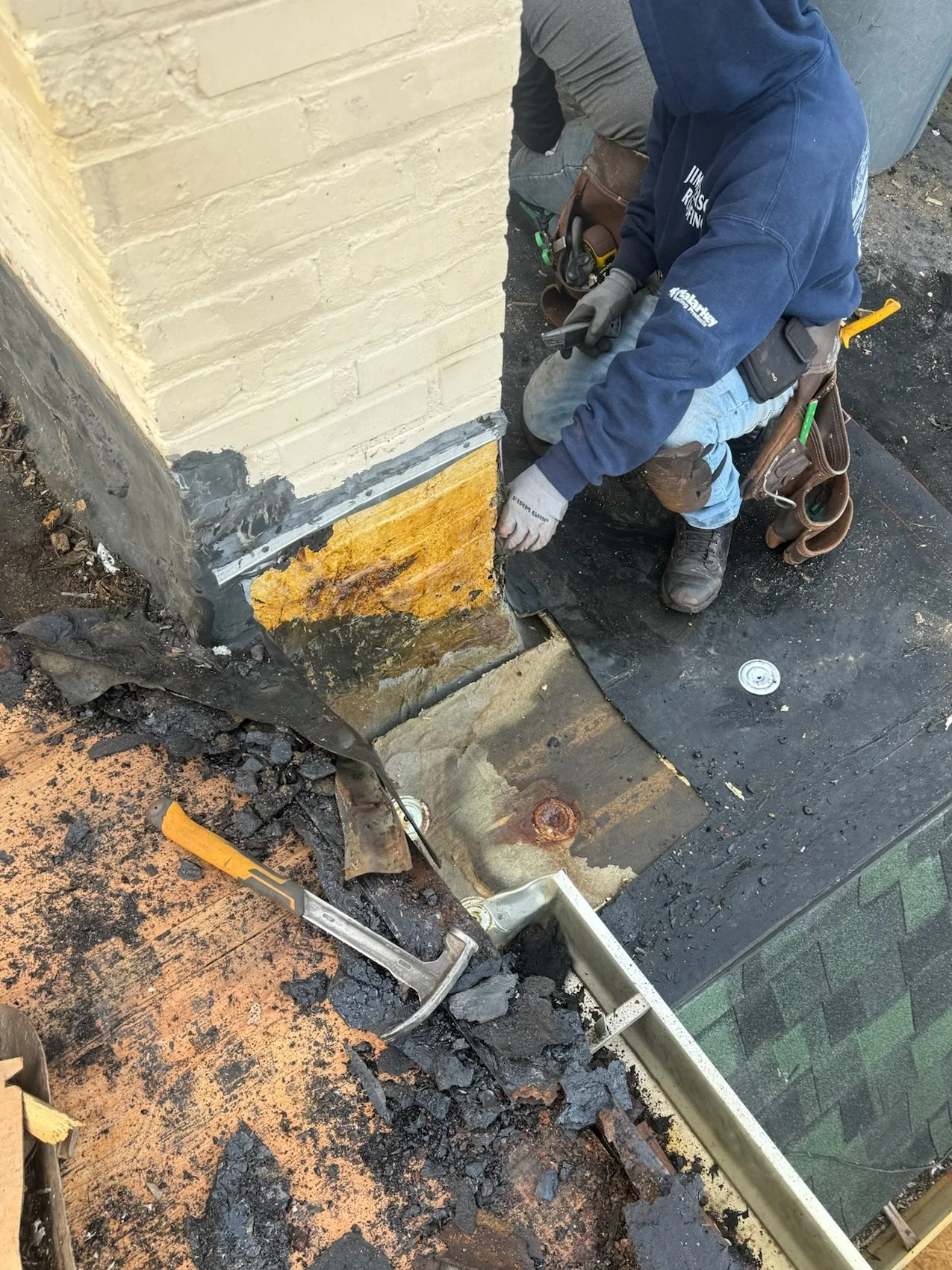
The roof repair vs. replacement question comes down to three things. How much service life is left, how far the damage has spread, and whether the underlying cause can be corrected without pulling the roof off.
A targeted repair makes sense on a younger roof with isolated damage, flexible surrounding shingles, dry decking, and no history of the same leak returning.
Replacement is the better value when the roof is near the end of its life, damage shows up on multiple slopes, shingles are brittle or broadly worn, previous repairs did not hold, decking is soft or sagging, there are already multiple layers on the house, or the ventilation cannot be fixed without removing the shingles.
We will be straight with you here. We do not chase patch fixes on aging roofs. An aging roof can be an everlasting headache, and patching does not correct the underlying problem. It buys a season and costs you money you would rather put toward the real solution.
Tearing the old roof off is what gives our crew access to the decking, flashing, underlayment, roof edges, and ventilation. That is when we find soft sheathing, replace it, and add the ridge and attic venting that keeps heat and moisture moving. Those vents also keep the house cooler in summer, which is a benefit most homeowners do not expect until they live through the first August with it.
Your Roof Is Part of a Bigger Exterior System
Shingles, decking, flashing, ventilation, fascia, soffits, gutters, and siding are all one water management system. Overflowing gutters keep the roof edge saturated. Failed roof to wall flashing sends water behind the siding, where you will not see it until the sheathing is soft. Blocked soffit vents choke off the intake air your attic needs.
This is where being a full exterior company helps you. We handle roofing, siding, windows, and doors, so we are not looking at your house through one narrow lens. If your roof is due and your fascia is going soft, we can sequence the work sensibly and keep the details tight where the systems meet.
Get a Clear Answer Before the Next Storm
You do not have to wait for water to drip through your ceiling to find out where your roof stands. Start in the yard, check what the gutters are collecting, look in the attic if you can do it safely, and watch your ceilings during the next hard rain.
When warning signs show up in more than one of those places, when the roof is in that 20 to 25 year window, or when repairs have stopped holding, it is time for a real conversation with a contractor who knows Michigan weather.
Exteriors of Lansing is locally owned, licensed and insured, and has been taking care of Greater Lansing homes since 2000, including Grand Ledge, DeWitt, Okemos, Haslett, and East Lansing. Stop by our Grand Ledge showroom to see what we install, or call us at (517) 371-3100 for a free estimate.
Local people doing local business. That has always been how we do it.
Frequently Asked Questions
-
Absolutely, and this is the most common thing homeowners are surprised by. Widespread cracking, curling, heavy granule loss, loose flashing, or brittle shingles all mean the system is at the end of its useful life whether or not water has made it inside yet. Replacing before a major leak is far cheaper than replacing after, because you are not also paying to fix insulation, drywall, and rotted decking.
-
Most asphalt roofs around Lansing last about 20 to 25 years. Start planning earlier if the roof has taken storm damage, has poor attic ventilation, has leaked more than once, or is showing obvious deterioration from the ground.
-
Not by itself. A new roof sheds loose granules during its first year, and that is expected. Heavy buildup that keeps returning after you clean the gutters, especially alongside visible bald spots and an older roof, is worth having a professional evaluate.
-
One missing shingle on a younger, otherwise sound roof does not mean the roof is finished. Multiple missing, lifted, or creased shingles across several slopes tells a different story and usually points to wind damage or age catching up with the whole system.
-
Not automatically. Ice dams are driven by attic heat loss, air leaks, insufficient insulation, and poor ventilation, and those can sometimes be corrected without a new roof. Replacement enters the picture when water has already damaged the decking, or when the roof was near the end of its life anyway and the ice dam simply found the weak spot first.